
Title tags and meta descriptions: what our checker actually measures
Length, presence, and duplication—not magic ranking formulas. Understand the signals behind IntenseSEO title and meta checks.

What we fetch
The analyzer downloads live HTML for the URL you submit. Title and meta description values come from the document head (and common CMS patterns), not from what Google chose to display in search results.
If your CMS injects tags via JavaScript after load, the audit reflects what our server-side fetch sees—worth knowing for SPAs.
Length heuristics
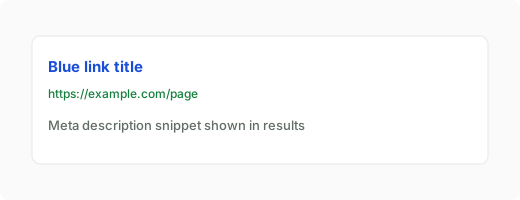
We apply practical pixel-width approximations: titles that are too short may under-explain the page; titles that are too long risk truncation in SERPs. Meta descriptions have similar bands.
These are guidelines, not penalties issued by our tool. Google may rewrite snippets anyway.
Duplicates and missing values
Duplicate titles across multiple URLs confuse both users and crawlers about which page to prioritize. Missing meta descriptions do not always block indexing, but they remove your chance to set the snippet.
Alignment with H1
Large mismatches between title, H1, and visible topic can signal thin or misleading pages. We surface alignment hints as warnings—not as a demand that every word match.
Pair checks with Search Console
Use IntenseSEO for a fast technical and on-page snapshot. Use Google Search Console for query-level performance, index coverage, and which snippets Google actually shows.
Try IntenseSEO on your URL
Free audit with 90+ checks at https://intenseseo.com.